



March 11, 2026
AI Can Build the App in 30 Minutes.
By Trey Reeme, Trabian's Chief Operating Officer
The Real Question Is: What’s Running It?
Over the past few months, I’ve built three full-stack applications with AI assistance. In one case, I had a fully functioning web app in about 30 minutes — authentication, database, analytics dashboard, mobile responsiveness, deployed the same day.
If you lead technology at a bank or fintech, that statement should both excite you and make you slightly uncomfortable.
Because the app is no longer the hard part.
The operational layer is.
The 30-Minute App Is Real
I know because I’ve built them using combinations of Claude Code in Cursor or my terminal or even Cowork, on stacks of React, Vite, Typescript, and Google Firebase or Supabase. If you know me, you know I’m not a traditional engineer and may be surprised that my Github commits look like this over the past six months.
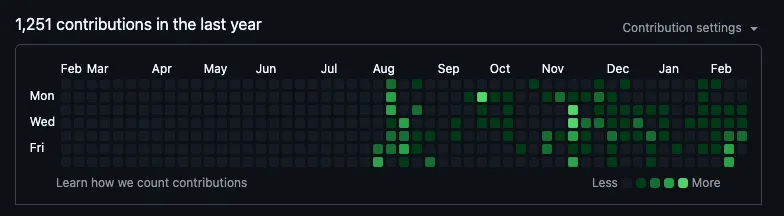
I’m a business guy who knows how banks run, has peeked over Matt’s shoulder for twenty years, and isn’t afraid to direct teams to build rather than buy. In fact, the apps I’m building for personal use have features readily available commercially, but I don’t want another subscription to manage.
What I’ve found first-hand is AI can scaffold a modern application stack almost instantly. I can generate clean UI components, wire up authentication, define a data model, and produce something that feels production-ready. What used to take weeks just to set up properly now takes less than an hour.
These superpowers aren’t just able to be leveraged at the personal level, of course. This fundamentally changes the economics of experimentation in our organizations as well. It lowers the barrier to entry for internal tools, workflow automation, and even customer-facing products. Teams that used to wait in backlog queues can now build.
But the first version that “works” is not the same as a system that is secure, auditable, resilient, and maintainable inside a regulated institution.
That distinction matters more than ever.
What Happened After the 30 Minutes
As our Trabian team was ramping up their use of AI tools internally across our whole organization last year I decided the best way for me to keep up was to get Cursor running with Claude Code and see how far I could push it. So I started with personal app experimentation.
I want to focus here on the most comprehensive full stack app I built. The app itself was simple on the surface. It’s a structured goal-tracking journal. You define a handful of goals, track daily progress, reflect through guided journal prompts, and see analytics over time. It’s something I use with my executive coach to create rhythm and accountability.
Nothing revolutionary. No breakthrough UX.
Just a focused workflow I wanted control over.
I used ChatGPT to brainstorm with me as I thought through the stack and the feature set — React and TypeScript on the front end, Firebase for authentication and data, something simple but modern. I asked for ideas for structuring the architecture and then I had ChatGPT generate the initial prompt I would give Claude to scaffold the project cleanly.
Thirty minutes later, I had a working application. Users could log in, define goals, write daily entries, and see progress on a dashboard. It looked polished. It felt complete.
That said, it was not operationally mature.
Over the next three months, I had Claude Code spend roughly 300 hours and millions of tokens (as I supervised and orchestrated it) turning that initial version into something I would trust in a production environment. That work included security hardening, proper data isolation, input validation, audit logging, performance optimization, testing infrastructure, error handling, and repeated refactoring of duplicated logic that AI had generated for speed rather than coherence.
None of this work was visible in a demo.
All of it was essential.
And this was a small personal app used by me and me alone. There were no regulatory audits, no core integrations, no vendor risk reviews, no SOC 2 controls.
Imagine that same dynamic inside a financial institution and that’s where things get tricky.
The Real Shift: Building vs. Operating
At a FINTOP meeting in Nashville last fall, one theme kept surfacing: AI is about to explode the number of applications inside financial institutions.
That’s not theoretical. It’s already happening. Engineers are building internal assistants. Operations teams are automating workflows. Product teams are prototyping new experiences in days.
The constraint is no longer code generation.
The constraint is operational control.
When every team can build an app, the real question becomes: where do those apps run? How are workflows orchestrated? How are failures handled? Where does audit logging live? Who enforces authentication and authorization standards? How do you ensure AI-driven decisions are traceable?
That’s the shift.
What’s so exciting for us at Trabian is that’s exactly where our product Mesh sits.
What Mesh Actually Is
Matt described it best last fall: Mesh is “a workflow platform as much as an integration platform.”
It isn’t just a connector layer. It’s an operational platform designed to give financial institutions and fintechs control over how systems communicate and how workflows execute across them.
Under the hood, Mesh is built on Temporal for durable workflow orchestration. But the technology stack isn’t the headline. The architecture is.
Financial services doesn’t run on single-shot API calls. It runs on stateful, multi-step workflows: loan originations, payment rail routing, core-to-app synchronization, exception handling, vendor handoffs. These processes cross systems, involve decision points, and carry major compliance implications.
Mesh treats those workflows as first-class citizens. They are orchestrated, observable, retry able, and auditable by design.
Why This Matters in the AI Era
When I built my personal app, the hard part wasn’t generating UI components or wiring up a database. The hard part was everything around it: making sure users could only see their own data, handling unexpected failures, logging activity properly, preventing security vulnerabilities, and keeping the codebase understandable as it evolved.
AI accelerates development. It also accelerates entropy.
Without shared infrastructure, each new AI-generated app inside a bank will implement authentication slightly differently, log inconsistently, handle errors in its own way, and integrate with the core in fragile patterns. Over time, that becomes operational risk.
Mesh centralizes that responsibility. Authentication, authorization, audit logging, retries, monitoring, integration orchestration — these aren’t reimplemented per app. They live in a controlled operational layer.
That’s not just convenience. It’s governance.
Complete Integration Control
For institutions licensing the full platform, Mesh becomes the control plane for communication with the core. Instead of licensing individual connectors or relying on fragmented integrations, the bank owns its integration layer.
Workflows are orchestrated through a durable engine. Failures are visible to the operators. Retries are deterministic. Developers can build on that foundation rather than around it. Integrations with payment rails, core systems, and third-party applications become managed processes rather than brittle point-to-point connections.
In a world where speed matters, control matters more.
AI + Workflow, With Auditability
AI is powerful in isolation. It is transformative inside real workflows.
Mesh supports AI-driven steps embedded directly into orchestrated processes. That means you can include AI decision points with human-in-the-loop checkpoints, deterministic retries, and full audit trails of what happened and why.
If an AI system participates in a lending workflow or a fraud review process, you need traceability. You need to know which inputs were used, what decision was made, and how the workflow progressed.
That isn’t a model problem. It’s an orchestration problem.
Mesh solves it at the workflow layer.
The Strategic Reality
Application scaffolding is becoming commoditized.
Operational maturity is not.
You won’t differentiate because you can generate a React application quickly. You will differentiate because your workflows are durable, your integrations are controlled, your audit trails are complete, and your AI usage is governed.
Mesh is a primary growth focus for us at Trabian because we believe the explosion of AI-built applications is inevitable. The question isn’t whether banks will build more apps. They will.
The question is whether those apps will sit on fragile, ad-hoc middleware or on an enterprise-grade workflow platform designed for regulated environments.
The Question for Bank Leaders
If every product manager and engineer in your institution could generate a working app this week, what infrastructure would you need beneath it?
Where would authentication be standardized?
How would role-based access be enforced?
Where would audit logs live?
How would failures be retried?
How would AI decisions be embedded responsibly?
Who owns the integrations to other systems?
If the answer varies by team, that’s the opportunity — and the risk.
The future isn’t fewer applications. It’s exponentially more. The institutions that thrive won’t be the ones who build the fastest demos. They’ll be the ones who already have the operational platform in place.
AI can build the app in 30 minutes.
The real question is what’s running it.
That’s the problem we’re excited to solve.